A. N. Abell Auction Co.  ·  Established 1916  ·  Los Angeles Gallery previews 8:00 am – 3:00 pm  ·  (323) 724-8102
ABELLAuction Company
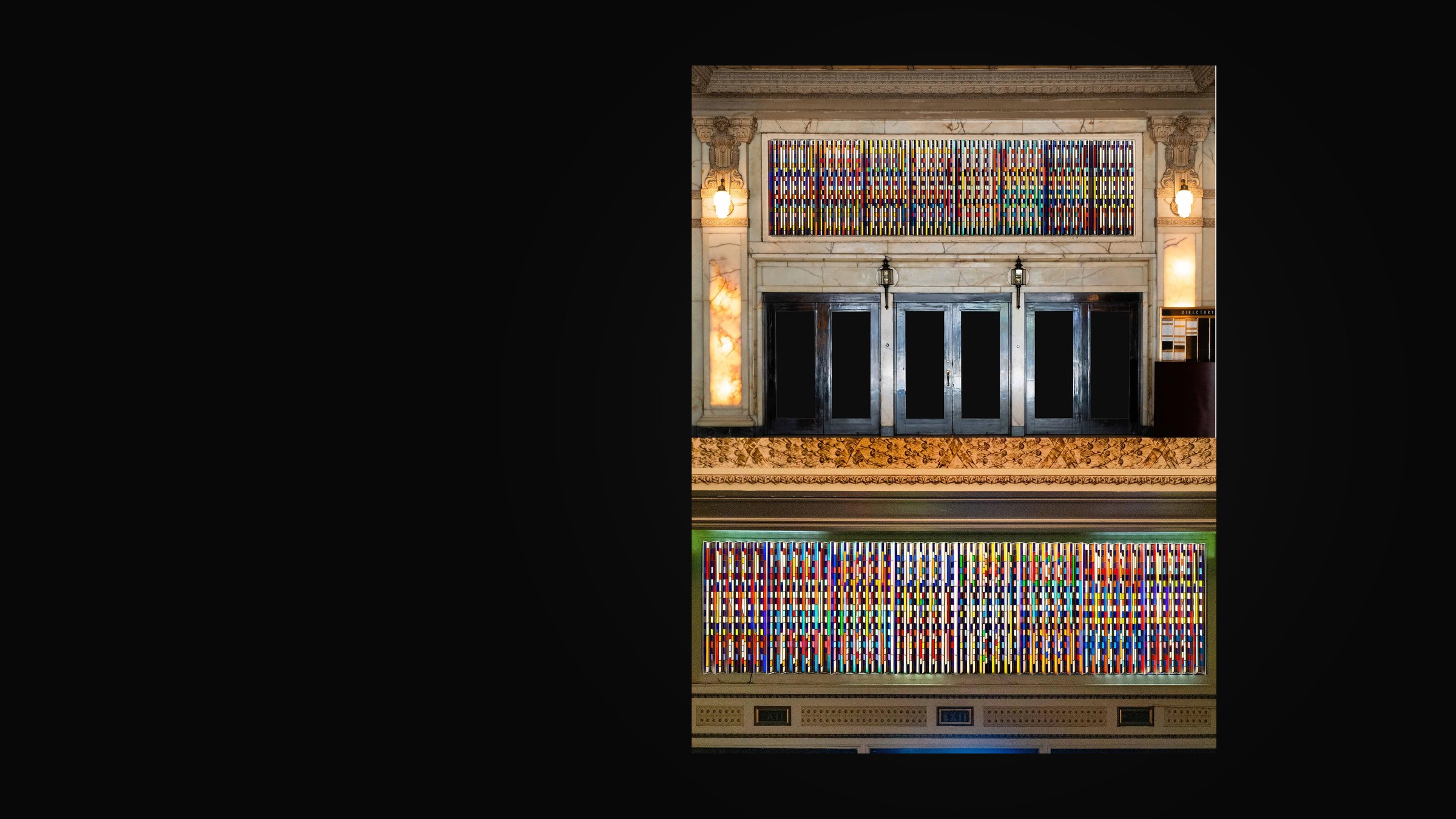
A stained glass installation by Yaacov Agam, removed from the Spreckels Theatre and now on public view
A guide from Abell

Saved by Abell

Some things are too important to be forgotten.

Most of what is valuable in a house is already known to be valuable. Occasionally something is not. This is a guide to what gets overlooked, what to look for, and — more importantly — what not to do before someone qualified has seen it.

A painting hung in the same hallway for fifty years and never questioned. A ring worn to weddings and funerals and never looked at through a loupe. A chair that turned out to be by someone. A box of papers nobody opened because it was only papers.

Objects are rarely lost. They are misfiled — put in the wrong category by someone in a hurry, and then left there by everyone who came afterwards, because nobody had a reason to look again.

What follows is what a specialist looks for, written plainly. It will not make anyone an appraiser. It is meant to do something simpler and more useful: to help you notice that something deserves a second look, and to stop you doing the one thing that would cost you most.

Where it hides

Eight places to look again.

None of this is a valuation, and none of it is a substitute for having an object in front of a specialist. It is where the specialist starts.

Paintings and works on paper

The most commonly misjudged category in any house, in both directions — the grand gilt frame over the fireplace that is a decorative copy, and the small dark panel in the back bedroom that is not.

  • The back, always, before the front. Labels from galleries, exhibitions, framers and shippers are a record of where a picture has been.
  • Stencils, wax seals, chalk numbers and old inventory tags on the stretcher or the backing board.
  • A signature is the least reliable thing on a painting. Signatures are added, and good pictures are often unsigned.
  • Works on paper in a drawer or a portfolio — prints, drawings and watercolours are stored flat and forgotten far more often than paintings are.
  • Anything you were told was 'a copy' by someone who was not qualified to say so.

Silver

Silver is the category most often given away by weight, because it lives in a drawer, it is tarnished, and nobody wants to polish it.

  • Marks, on the underside or the rim: a maker's mark, a standard mark, and in English silver a letter that dates the piece to a year.
  • American silver is often marked simply 'sterling' or '925', sometimes with a retailer's name that matters more than the mark.
  • Weight in the hand. Cast handles, applied borders and a heavy gauge all point somewhere different from a thin, stamped piece.
  • Engraved crests, monograms and armorials — a line of ownership, not a defect.
  • Original boxes, canteens and fitted cases. The case is often the evidence.

Jewelry

Jewelry is worn, inherited and re-set, and the paperwork disappears within a generation. Almost nobody looks at their own jewelry closely.

  • Inside the shank of a ring and on the clasp of a necklace: a maker's signature, a metal standard, a serial number.
  • How a piece is made rather than what is in it. Hand-finished settings, cut-down collets and hand-pierced galleries date and place a jewel.
  • The colour of the metal, the style of the cut and the design together suggest a period — an old stone in a modern mount has usually been re-set.
  • Costume jewelry by a known house can be worth more than a plain gold chain. Do not sort by material alone.
  • Anything described in the family as 'not real' without a reason ever having been given.

Furniture and design

Twentieth-century design is the category that has moved furthest in a lifetime, which means the people who bought it new rarely think of it as collectable.

  • Labels, stamps, branded marks and paper tags under a seat rail, inside a drawer, or on the underside of a top.
  • The construction: hand-cut dovetails, saw marks, shrinkage across a board, and a colour underneath that does not match the colour on top.
  • Mid-century pieces bought as ordinary household furniture — a lounge chair, a credenza, a desk lamp, a set of dining chairs.
  • Studio ceramics, glass and metalwork on shelves and windowsills, usually signed or monogrammed on the base.
  • Pieces that were 'improved' — refinished, re-upholstered, or cut down to fit a room.

Asian works of art

The category where family attribution is least reliable, because objects arrived as souvenirs, gifts and decoration, and were catalogued by nobody.

  • Reign marks and seal marks on the base — present on both period pieces and later ones, so a mark is a question rather than an answer.
  • Jade, hardstone carvings, scholar's objects and snuff bottles, which are small enough to have been put in a cabinet and forgotten.
  • Scroll paintings and calligraphy stored rolled in a cupboard.
  • Bronzes, cloisonné and lacquer, especially anything with an old collection label.
  • Anything brought back from military service or a posting abroad, with the dates and the route still remembered in the family.

Watches and clocks

A watch is the object most likely to be worn daily, valued at what it cost, and never looked at again.

  • The movement, the case back and the lugs — reference and serial numbers live there, not on the dial.
  • The original bracelet, buckle, box and papers, which can matter as much as the watch.
  • An original dial, however imperfect. A refinished dial is usually the single most costly alteration.
  • Chronographs, divers' and pilots' watches bought as tools and worn hard.
  • Clocks with a named maker on the dial or the movement, and the pendulum, weights and key kept with them.

Books, documents and photographs

The category most often thrown away, because it looks like paperwork and it fills boxes.

  • Inscriptions, presentation copies and signatures on the front free endpaper.
  • First editions, identified by the printer's line and the publisher's statement rather than by the words 'first edition'.
  • Original dust jackets, however torn — the jacket is frequently most of the value.
  • Letters, contracts, telegrams, studio correspondence and signed photographs, particularly anything connected to the entertainment industry.
  • Loose photographs, negatives and albums, which are routinely discarded during a clearance and cannot be recovered.

Automobiles and the garage

The last room anyone clears, and the one most likely to be cleared quickly.

  • The chassis and engine numbers, and whether they agree with the title and the history.
  • Original paint, original interior, and the tool roll, jack and handbook in the boot.
  • The file: bills of sale, service records, correspondence, magazine features, old registrations, photographs of the car when it was new.
  • What is on the shelves and the walls — signage, badges, manuals, posters, spares in their original boxes, workshop equipment.
  • A car under a cover that has not moved in years. Do not judge it by the cover.
Before you do anything

The damage is almost always done by someone trying to help.

Nearly every avoidable loss of value happens in the week before a specialist arrives, with good intentions and a cloth. A specialist would far rather see an object dirty and untouched than clean and altered.

  • Do not clean it

    Surface dirt is reversible by a conservator. What comes off with a household cleaner frequently is not — glazes, patina, gilding, lacquer, original paint and old finishes all sit on the surface that is being wiped.

  • Do not polish the silver

    Polishing removes metal. Repeated polishing softens engraving and can wear a hallmark away entirely, which takes the maker and the date with it. Tarnish costs nothing to remove later.

  • Do not reframe, reline or 'freshen' a picture

    The back of a painting carries most of its documented history, and the frame is sometimes original to it. Reframing throws away labels; relining and restretching are conservation decisions, not tidying.

  • Do not refinish furniture

    Original surface is the thing collectors pay for. Stripping, re-staining, re-polishing and replacing hardware are all one-way, and all reduce what a piece will make.

  • Do not throw away paper

    Receipts, letters, valuations, insurance schedules, exhibition catalogues, service records and old photographs of the object in situ are provenance. Keep every box until someone has been through it.

  • Do not have a stone tested at the mall

    Removing a stone from its mount to test or re-set it destroys evidence about age and origin, and mountings are frequently more important than the family assumes.

  • Do not start the car

    An engine that has stood for years can be damaged badly in seconds. Recommissioning is a job for someone who does it professionally, and it is better done after the car has been assessed.

  • Do not break up a set

    Services, suites, pairs, runs of books and matched sets of anything are worth more together. So is a single-owner collection sold as one. Selling the best piece first is the most expensive habit there is.

How to look

Five minutes, properly spent.

Anyone can do this, with a phone and a torch. It is what a specialist does first.

  1. Turn it over

    The underside, the back, the inside of a drawer, the base of a lamp. Almost every mark that matters is somewhere nobody has to look at.

  2. Find the marks

    Signatures, stamps, labels, numbers, monograms, foundry marks. Photograph each one straight on and in focus. Do not rub them to make them clearer.

  3. Rake light across it

    Hold a torch almost flat to the surface. Repairs, overpaint, cracks, erased engraving and old joins appear under raking light and vanish under a ceiling bulb.

  4. Gather the paper

    Put every document that might relate to the object in one place, including the ones that appear to be nothing. Sort later, discard nothing.

  5. Photograph it plainly

    The whole object, square on, in daylight, against a plain background. Then the marks, then any damage. Plain photographs are worth more to a specialist than flattering ones.

From the archive

Forgotten. Found.

An H.R. Giger drawing of the Alien, dedicated to Gordon Carroll
H.R. Giger · from the estate of Gordon Carroll

Under a sofa, on its way out of the house

A drawing by H.R. Giger — dedicated by the artist to Gordon Carroll, producer of Alien — was found by Patrick Abell beneath a sofa that was being carried out of the Carroll house in Beverly Hills for donation. It was catalogued, photographed and sold.

Price realized$175,000

Yaacov Agam · Spreckels Theatre, San Diego

The forty-foot Agam that Abell would not let go to the wrecker

Commissioned in 1985 for the Spreckels Theatre in San Diego, the forty-foot stained glass installation was set for demolition with the building and was not granted historic protection. Abell removed the whole installation at the company's own expense, brought it to Los Angeles and put it in front of the world. It is today in a museum in Miami, where anyone can go and stand in front of it.

When to make the call

You do not need to know what it is.

That is the specialist's job, and there is no charge for the question. Send photographs and whatever you know — including nothing — and someone who handles these objects every week will tell you what you are looking at.

Most collections hold at least one object nobody has looked at properly.

Private view

Discover what's next.

Receive early access to upcoming auctions, private previews, estate stories and exceptional property.